Tuesday, November 03, 2009

DTI holds 4th Visayas-wide OTOP Fair in Cebu on Nov. 18-22

It’s three times the charm as the Visayan leg of the One Town, One Product (OTOP) Philippines holds its 4th annual fair at SM City Cebu Atrium this November 18 to 22, 2009.

This five-day trade fair will display a wide array of exciting homegrown products from Central Philippines dubbed "Distinctly Visayas", according to the Department of Trade and Industry (DTI), the marketing arm of the OTOP.

From souvenir items, novelty items, gift items, home decors, natural fiber, processed food, footwear to wearables, the OTOP fair aims to promote native goods from the Visayan islands.

The Visayas Region composed of Regions 6, 7 and 8 have joined hands to come-up with this fair to provide opportunities for budding entrepreneurs and develop a new culture of local pride.
The three regions of the Visayas have again come together to form a united front, a Supra-region, complementing each other through the sheer diversity of each region's products and tourist destinations that have captured more than half of the country's foreign visitors in the country.
The OTOP Visayas Island Fair is an activity that aims to highlight the OTOP program, a flagship project of President Gloria Macapagal Arroyo with the Local Government Units (LGUs) as the implementing arm.

The OTOP Philippines project is a government program to strengthen countryside development by promoting entrepreneurship and creating jobs.

This marketing event also aims to generate significant sales; train exhibitors in dealing and negotiating with local and foreign buyers and exporters and develop new exporters from among the participants.

Under the OTOP, LGUs take the lead in identifying, developing and promoting a specific product or service, of which their areas have specific advantage.

OTOP-Philippines provides a comprehensive assistance package through a convergence of services from LGUs, national government agencies and the private sector. This includes business counseling, skills and entrepreneurial training, product design and development, appropriate technologies and marketing.

The DTI said the OTOP-Philippines is designed to support micro, small and medium enterprises (MSME's) in the manufacturing and marketing of distinctive products and services to a much better level and achieve measurable results.

Tuesday, October 13, 2009

DTI 7 regional and provincial offices adopt Knowledge Management


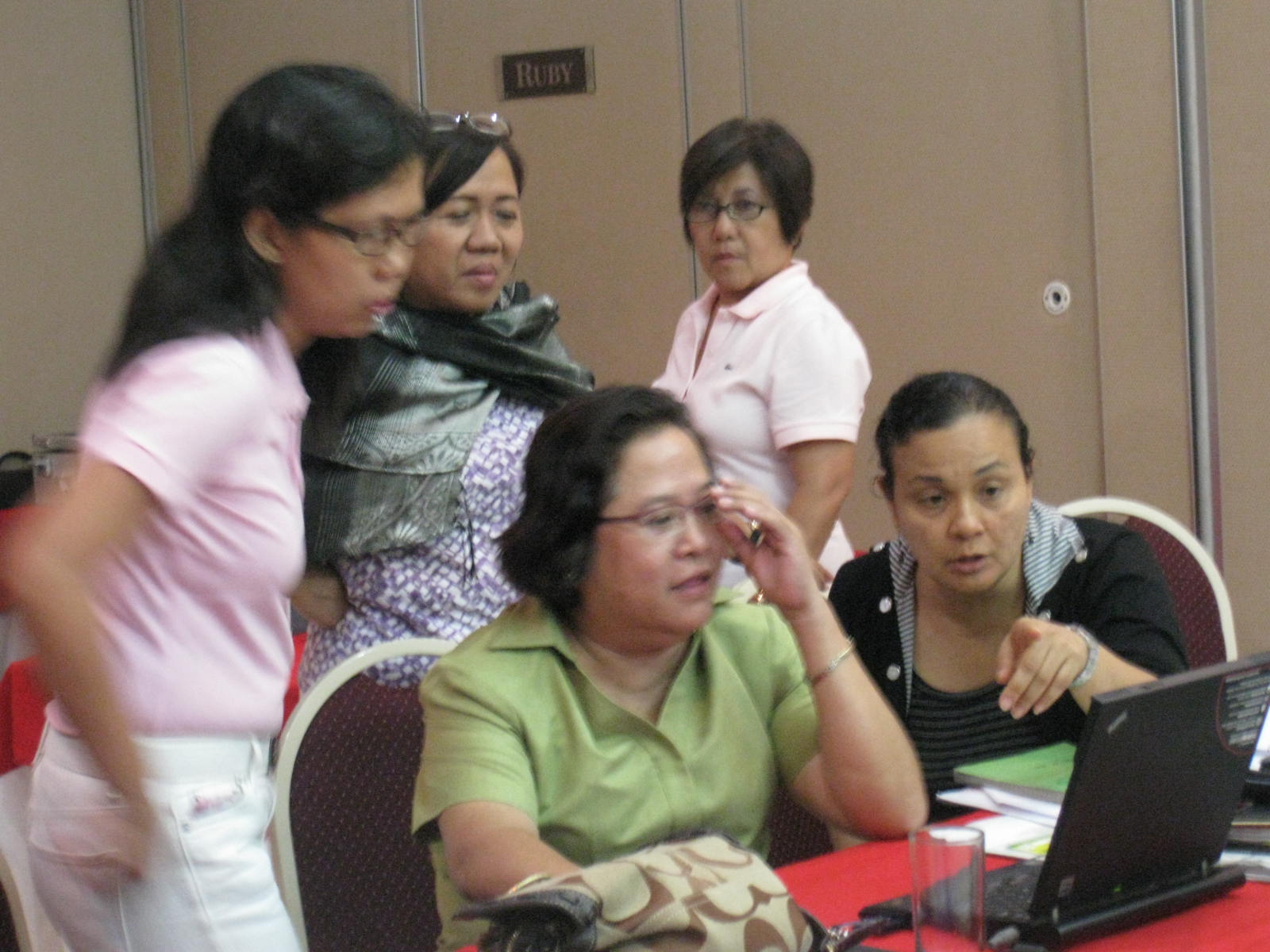
In order to better serve its clients, the regional and provincial staff of the Department of Trade and Industry Central Visayas Office (DTI 7) recently underwent a Knowledge Management (KM) Seminar Workshop in Cebu.

The workshop was made possible with the joint efforts of the Department of Trade and Industry and the German Technical Cooperation known as Deutsche Gesellschaft für Technische Zusammenarbeit (GTZ) under the Private Sector Promotion Program called the Small and Medium Enterprise Development for Sustainable Employment Program (SMEDSEP).

With the theme “Making Knowledge Work for DTI- Region 7’s Development Cooperation Projects, the seminar workshop was meant to improve the DTI efficiency of service and quality of information given to clients.


Employees from the Department of Trade and Industry Central Visayas regional and provincial offices participated in the KM seminar workshop in consonance with improving the agency’s management system to increase efficacy of service and customer satisfaction.

Mr. Lorenzo Templonuevo, GTZ KM Specialist, facilitated the workshop through topics that include: KM Strategies, Interfacing of KM and Quality Management, Core Values that Promote KM Ethical Culture, Knowledge Creation, Sharing and Reuse, KM Audit, KM Road Mapping.

The DTI is one of the key agencies of the Philippine Government charged with the promotion of an economic and business environment conducive to the birth and growth of enterprises and supportive of a fair and robust trade of goods and services both from within and outside the country

The SMEDSEP is a technical cooperation project between the Republic of the Philippines and the Federal Republic of Germany conceived to help improve the Philippine business and investment climate for Small and Medium Enterprises. video

Tuesday, September 01, 2009

Cebu is currently 4th best island in Asia

Cebu ranked no. 4 among Asian island destinations, according to Travel + Leisure magazine, which recently rleased the results of its World’s Best Awards 2009, a listing of the best hotels, airlines, cruises in islands and cities all over the world.

In the Condé Nast Traveler annual Readers’ Choice Survey, Cebu has occupied the seventh spot in the best island destination in Asia/Indian Ocean three times: in 2008 at 70.9, which is two points short of 2007’s 72.3 points and 2004’s 72.8 points.

Twice, it has been ranked 8th best island destination: in 2006 with 71.0 points and in 2005 with 69.5 in the same magazine survey.

Note that no other island in the Philippines has so far
made it
to the listing of Conde Nast Traveler or Travel + Leisure magazines

Both Travel + Leisure Magazine and Condé Nast Traveler are American publications based in New York.


Friday, August 07, 2009

Exporters' Expo in Cebu, August 27-30

Watch out for the Exporters' Expo on August 27-30 in Cebu.

More than 70 exporters in the country will unload their inventories for the local market at the least possible price during the activity.

Spearheaded by the Department of Trade and Industry (DTI-7), the event is slated at the SM City Cebu Atrium as part of the agency’s effort to help the ailing export sector amid the weak market interest due to the financial crisis.

Cebu, the furniture export capital of the Philippines accounting for about 60 percent of monthly exports, is feeling the brunt of the global financial crisis with foreign orders steadily declining.

The Exporters’ Expo is just one of the ways DTI assists exporters survive the crisis.

The event is also an opportunity for the local market to avail of the world-class furniture products at very affordable prices.

Aside from furniture products, the Exporters’ Expo will feature world-class products such as fashion accessories, gifts-toys-and housewares, among others.

The furniture manufacturers in Cebu is tapping the domestic market in order to survive but focus is on selling to institutional customers.

The four-day exposition is expected to attract buyers from all over the Philippines, as well as foreign tourists.

This is the first time that the government has extended its hand to invite exporters to join the Exporters’ Expo and allow local retail market to avail of the export quality products.

For more information on the Exporters’ Expo, interested parties may call on the DTI 7 Regional Office at
412-1868, 255-0036-37, or 412-1989 local 601 or 602.

Tuesday, June 16, 2009

Project Bayong Launch in Cebu


To provide a source of income for Filipinos affected by the global financial crisis, the Department of Trade and Industry (DTI) formally launched “Project Bayong” in Cebu on June 12 during the Kalayaan 2009, a Philippine Independence Day celebration.

During the trade and livelihood fair held at SM City Cebu on June 12 - 14, Bayong utility and fashion bags were on display and bayong weaving was demonstrated to the public.


Project Bayong highlights the hand-woven native bag made of pandan, rattan or buri.
In the last four months (February-May) DTI initiated a series of product development trainings which include basic skills in bayong weaving, skills upgrading and dyeing techniques.

As of May 2009, Project Bayong has been rolled out to 11 municipalities in Central Visayas. Around 11 basic skills trainings, 5 trainings in dyeing techniques, 6 trainings in skills upgrading benefited 605 people.

The municipalities where trainings were held include Barili, Bogo, San Remegio, Sta Fe, Bantayan Island in Cebu; Manjuyod and La Libertad in Negros Oriental; Talibon, Bien Unido, Ubay in Bohol; San Juan, Siquijor in Siquijor.

video

Tuesday, June 09, 2009

Bonding with Teammates


"In order to accomplish the agency’s tasks and realize all the projects, the DTI needs enough manpower knowledgeable in imparting the necessary information to beneficiaries and skilled in supervising projects. Being a lean organization, all warm bodies available at the DTI will be utilized for the purpose. Thus, smooth coordination and good working relationship among members of the organization is crucial to the success of the projects. It is in this context that the need for Building Cross Functional Teams is deemed necessary."


That was the statëment made in the activity proposal, but the actual Tambuli beach activity in Cebu wasn't really sombre, subdued or structured. In fact, it was relaxing and "filling" (my stomach felt the food was certainly worth mentioning).


Friday, June 05, 2009

Night at the Museums of Cebu


Last May 29, heritage and culture affectionados had a memorable experience.

Six museums in Cebu opened their doors from 6 o’clock in the evening up to midnight in celebration of the National Heritage Month and the observance of International Museum Day.


Called in the local dialect “Gabii sa Kabilin”, the night tour of museums in Cebu City is reportedly the only one of its kind in Asia, after a similar practice among museums in Berlin.


This is the third time that Gabii sa Kabilin unfolded in Cebu but it was doubly significant because Museo Sa Sugbo, the Cebu provincial museum, did not only join the event after just eight months in existence, but also served as the jump-off point to open this annual event.

"Gabii Sa Kabilin" also showcased some of the province’s festival dances and a retinue of good music in each of the museum’s galleries.

The night tour of the six museums (Museo sa Sugbu, Casa Gorordo Museum, Cathedral Museum of Cebu, Yap-Sandiego Ancestral House, Fort San Pedro and the Basilica del Sto. Niño Museum) cost only Php 100; Php 50 was added for those who preferred the tartanilla as conveyance to take them to the different museums.


Thursday, March 19, 2009

Entrepeneurship Seminar and Skills Training in Central Visayas


The Department of Trade and Industry (DTI) is currently conducting free business seminars and skills trainings in Central Visayas.

The photographs here were taken during the Cebu entrepreneurship seminar and skills training held last March 13.

Displaced workers, OFWs and their families, unemployed and prospective entrepreneurs took advantage of the free seminars and trainings. There were more than 200 participants during the Cebu activity.

These seminars and trainings is part of the Comprehensive Livelihood and Emergency Employment Program (CLEEP) of the Philippine government

CLEEP aims to “save or create millions of new jobs to weather the effects of the current global economic crisis.”


With the rising number of workers affected by the present global situation, the DTI is taking the necessary interventions as fast as it can.


For companies interested to avail of entrepreneurship and business related seminars and trainings for its workers, they may contact the following DTI representatives: Elias Tecson for Cebu at tel no. 253-2631 or 4121863; Marisol Balistoy for Bohol at tel no. 411-3302 or 501-8260; Bing Sumanoy or Araceli Maypa for Negros Oriental at tel. no. 225-7211 or 422-1764; Marlene Patria for Siquijor at tel. no. 344-2238 or 480-9065


Friday, February 06, 2009

Project Bayong in Barili, Cebu


In line with the Comprehensive Livelihood and Emergency Employment Program (CLEEP) of the Philippine government, the Department of Trade and Industry (DTI) will launch the “Project Bayong”, a job generating activity, at the Barili Gymnasium in Cebu province on February 10, 2009 at 9:00 in the morning.

This project aims to develop the abundant raw material and the existing skills in Barili into a product (a hand-woven bag or “Bayong”) which has a potential demand both for local and export market.

The municipality of Barili has been chosen by DTI as a launch site for the project in Cebu because Barili is noted for its “bayong” craftsmanship, making use of local pandan material.

”Project Bayong”, which highlights the hand-woven native bag made of pandan, rattan or buri, takes into consideration the environmental aspect where there is a growing worry over billions of plastic bags polluting the environment, clogging canals and littering the streets.

In China , Project Bayong’s prospective market, there is a move to ban the use of plastic bags and a shift towards the use of native baskets and/ or reusable cloth bags for shopping.

DTI is currently drawing-up plans, provide strategic interventions and mobilize craftsmen nationwide to boost mass production of quality “bayong.”


Trainings lined up for Barili include: (1) Basic Skills in bayong weaving to have more new weavers; (2) Upgrading Skills Training to those who have been currently weaving but need a skills upgrade; and (3) Training on Dyeing Techniques where various colors could be integrated to increase the “bayong’s” marketability.

According to DTI, the main goal of the project is to seek the support of Local Government Units and NGOs to provide sustainable livelihood and income-generating opportunities and establish more entrepreneurs who will help and strengthen communities in facing the global crisis.

CLEEP is one among several poverty alleviation government programs viewed as an immediate solution to the country's burgeoning unemployment problem and as an immediate response to the global economic crisis.

Thursday, January 08, 2009

Sad experience with Cebu Pacific Air


It is nice to know that the Philippines has its own budget airline --- Cebu Pacific which caters to Filipinos with modest means. Lately, however, it seems Cebu Pacific is too ambitious in its quest to cater to this market segment.

The fares may be affordable but their service does not quite live up to expectations.
Too many flights and not enough planes.

Take for example my experience last December 31. We landed in Manila from Bangkok at around 4:30 a.m. I was suppose to be be back in Cebu at 9:30 in the morning. But my flight was very much delayed. It led me to believe our group wasn't in their flight schedule; there was none on the flight monitor. There was also no announcement or apology for the flight delay from Cebu Pacific..

Note that this wasn't the first time that Cebu Pacific delayed flights.

I wasn't the only one complaining at the front desk, as you can see in the photos. Of course, there was pandemonium, bordering on passenger mutiny. Passengers, especially those with kids, were worried about spending New Year at NAIA.

To ease the tension, the staff said that there is going to be a flight to Cebu at 11:00 a.m, But the time indicated on our ticket was 8:30 a.m. We had been waiting for hours! This airline ethic was unacceptable to the hungry and tired passengers. Not a few heated exchanges were made.

It appeared that the staff assigned at the NAIA airport wasn't good in crisis management. They had to call in the airport police to resolve the matter. Unfortunately, this complicated the situation.

It was nearl;y 3:00 in the afternoon. when I arrived, happy and relieved, at the Mactan Cebu International Airport.

Bangkok Vacation


So, what did I do during last year's long Christmas holiday?

I went gallivanting in Bangkok with Laura and Jackie!

Grand Palace, Wat Po, Emerald Buddha, Reclining Buddha, Coins Museum, Vimanmek Teakwood Mansion, Platinum and Pantip Shopping malls, other tourist traps, were just some of the places we visited.

I don't need to talk in detail about Bangkok. I'm sure you have read the brochures. Needless to say, food and books have been the main focus in my trip.

I noticed the complexity of food ingredients and Thai language used predominantly in newspapers and books. So unlike the simplicity of Cebuano food preparation and the predominance of English language publications in Cebu (of course, how can we be the top emerging Business Process Outsourcing destination if English wasn't our second language!)

Wednesday, December 10, 2008

STK Ta Bay Sa Paolito's Seafood House


Here it is ... a museum-like restaurant --- the STK Ta Bay Sa Paolito's Seafood House.

This "House of Exotic Food" is found at Orchid Street in Capitol Site, Cebu City. Their website address is
http://stktabay.com/

Sure, the food tasted very good. I ate tuna panga, baked scallops and lechon kawali with rice (this statement has been edited by Aga, my eating buddy). I would have wanted to order more but then I also wanted to eat the mint brownies of Starbucks Cafe, a special Christmas treat.

STK Ta Bay, though, feels a little creepy with all the antiques around. Take note of the capiz (sea shell) windows. With their ambience, you'd expect to meet a supernatural being any moment.

Sorry for the blurry photo. This picture was taken with a cellphone camera.

Thursday, October 16, 2008

1st Bijoux Cebu International Fashion Accessories Show


The Cebu Fashion Accessories Manufacturers and Exporters (Fame) Foundation made initial earnings amounting to $1.7 million from its first international show in Cebu.

Cebu Fame president Janet Chua said the amount represents only the initial negotiated sales from 89 percent of the show’s exhibitors and is the direct result of the participation of 147 foreign buyers and 5,000 registered visitors.

Fame held last Sept. 20-22 the international fashion accessories show, Bijoux (French for jewelry), at the Shangri-La’s Mactan Island Resort and Spa.

Of the initial sale figure, more than $740,000 were booked sales while more than $910,000 are still under negotiation and over $14,000 has been reported as total cash sales.

Bijoux e-marketing and publicity committee head Reyna Tio said the buyers are representatives of various foreign brands. “Their number is small but they are well-chosen because we target our products on the right clients, (those) who will really buy.”

Fame pointed out that the Bijoux sales were bigger that what the group earned during an exhibit in Hong Kong last June.

Fame reported a total of 147 exhibitors in the Bijoux Cebu, about 53 percent of which are small enterprises and 45 percent are medium-sized businesses. At least 96 percent of the products displayed during the show were costume jewelry.

Although costume jewelry made up most of the sales, exhibitors noted an increase in the popularity of other product lines, including bags, baskets, house ware, footwear, belts and hats.

Chua said that these pieces are marketable because “these were intricately designed, (are) affordable (and) fit the present fashion demand.”

She said the market for Philippine products might pick up in 2009 after three years of slowdown because these products are now made in line with market demand while target foreign buyers are showing interest in natural wood accessories as a result of ecological awareness.

With this, the local fashion accessories sector also hopes to increase the country’s market share next year as target buyers from the United States and Europe increase their orders.

Bijoux Cebu is Fame’s counterpart to the furniture sector’s annual Cebu X (Cebu International Furniture and Furnishings Exhibition). It was organized to showcase Cebu and the Philippines as Asia’s destination for green jewelry.

Bijoux Cebu chairman Butch Carungay said that the industry plans to hold on a much bigger space at the Shangri-La Mactan next year.


Thursday, July 31, 2008

Sandugo Regional Product And Raw Material Showcase


More than 80 exhibitors from all over Central Visayas participated in the five-day Sandugo Regional Product and Raw Material Showcase at the Island City Mall, Tagbilaran City, Bohol on July 23 to 27.

Department of Trade and Industry (DTI) Central Visayas Regional Director Asteria Caberte said the exhibition brought sales of Php 22 Million and highlighted the finest of the region's OTOP (One Town, One Product) including unique products and services that make use of indigenous raw materials and local ingenuity.

Caberte said the participants come from the tourism, food, fashion accessories, crafts, Gifts, Toys and Housewares, and Information and Communications Technology sectors.

Craft producers in Central Visayas presented prototypes of their work after a series of trainings and one-on-one consultations with expert designers.

The fair also featured a raw materials gallery to afford buyers and product designers with a plethora of materials to use, and this will be complemented with craft demonstrations for the interested public, according to Caberte.

Emerging tourist destinations in the region will likewise be showcased with packaged tours to be made readily available at the booths.

National buyers were present during the fair, including exporters, buying agents, wholesalers, retailers, manufacturers and subcontractors.

Booths were set up at the Island City Mall to display the wealth of natural wonders and the related adventure and fun activities that are available for tourists and visitors who wish to explore the following destinations on the rise.

Several DTI initiated or assisted programs geared towards making our local products and services globally competitive were launched during the 2008 Sandugo Regional Product and Raw Material Showcase.

These programs include the Subcontracting Partnership for Innovation Program (SPIN); Integrated Technology Systems and Support Amenities for Food Enterprises (ITS SAFE) project implemented by the Bohol Chamber of Commerce in close coordination with the DTI, The Department Of Science and Technology and the Provincial Small and Medium Development Council; the offering of B.S. Industrial Design course at the Central Visayas State College for Agriculture, Forestry and Trade (CVSCAFT) with support from the German Technical Cooperation Program or GTZ and DTI; The DTI Product Catalogue, Tatak Bohol Concept and the Information and Communication Technology Council.

The One Town, One Product (OTOP) program is all about developing local skills, using indigenous materials and promoting entrepreneurship & partnership.


Tuesday, July 15, 2008

Invitation To The Regional Trade Fair In Bohol

I would like to invite everyone to the Sandugo Regional Product and Raw Material Showcase at the Island City Mall, Tagbilaran City on July 23 to 27.

The exhibition will bring to the island the finest of Central Visayas’ OTOP (One Town, One Product), highlighting unique products and services that make use of indigenous raw materials and local ingenuity.

Participants will come from the tourism, food, fashion accessories, crafts, gifts, toys and house ware, and information and communications technology sectors.

Craft producers in Central Visayas will be presenting prototypes of their work, which are of world-class quality after a series of trainings and one-one–one consultations with expert designers.

The fair will also feature a raw materials gallery to afford buyers and product designers with a plethora of materials to use, and this will be complemented with craft demonstrations for the interested public.

Emerging tourist destinations in the region will likewise be showcased with packaged tours to be made readily available at the booths.

National and international buyers are also expected to be present during the fair, including exporters, buying agents, wholesalers, retailers, manufacturers and subcontractors.

Booths will also be set up at the Island City Mall to display the wealth of natural wonders and the related adventure and fun activities that are available for tourists and visitors who wish to explore the following destinations on the rise.

Several DTI-initiated or assisted programs geared towards making our local products and services globally competitive will be launched during the 2008 Sandugo Regional Product and Raw Material Showcase.

Thursday, June 12, 2008

Subic, Angeles City and Clark Freeport (Philippines)


The Trade and Industry Information Center (TIIC) recently spearheaded a DTI-wide Communication Plan Seminar-Workshop held on 04-06 June 2008 at the Subic International Hotel.


The workshop, which was facilitated by the Philippine Information Agency (PIA), was organized to gather inputs from all DTI bureaus, attached agencies, and regional offices to ensure that their own ComPlan needs are integrated into the DTI-wide ComPlan.


All DTI Communications Officers were invited to attend the said workshop.

Before the DTI Complan Workshop, we had the Philippine Registry seminar (June 2-4) held on the same venue.

Most participants came from the National Economic Research and Business Assistance Centers (NERBAC) in the country.


T
he Philippine Business Registry (PBR), the online registry and business registration facility, highlights the collaborative efforts of national and local government agencies to help streamline business registration procedures in the country.

What made the week memorable was the time I took to explore Angeles City and Clark Freeport on my own. I actually booked a room at the Koala Inn for such activity.

I’ve posted photos of my personal exploration.


Thursday, May 08, 2008

2nd MANCOM in Bohol


We traveled from Cebu to Bohol via Supercat seacraft for our second Management Committee Meeting (MANCOM) last May 5 - 7.


Other than tackling official business, what did we do ?

I and my officemates watched the concert of Jed Madela, Richard Poon and Sam Milby (I like Jed’s choice of songs and his rendition of my favorites. In fact, I'm impressed with his singing voice. He has a wide vocal range and a clean, clear, smooth voice ... good for a cappella or with simple instrumental accompaniment)

I also remember eating the Buzz (Beehive Farm) halo-halo, an all natural Filipino treat made of home made ice cream and fruits in season, at the Island City Mall … yummy. The Island City Mall is a bit crowded nowadays with the increasing number of traders and mall visitors. It's about time for mall expansion.


By the way, the Baclayon Bed and Breakfast hotel where we stayed has a homey ambience and a good view of the Bohol countryside and crystal blue sea.


Monday, April 28, 2008

Family

I attended the 5th reunion of our clan last weekend. It was the usual family gathering except that the secretariat gave us an activity program with a diagram of the family tree attached and a list of officers of the family cooperative --- unusual for someone like me who hadn't attended a family reunion in years.

I noticed that it was organized the way anyone would handle a national conference. And indeed this is a conference of relatives from Luzon, Visayas and Mindanao. The documentation staff also took photos of the event using a cellphone and digital camera for easy uploading on the family website. They distributed compact disk recordings of past reunions (our family reunion is every two years) which I haven't yet seen until now since my computer broke down. They also took the opportunity to update the list of contact information of relatives (cellphone numbers and email addresses) .... how's that for family efficiency and organization?

Friday, April 25, 2008

Change as a way of life

”You are where your actions and choices have taken you.”

This means that every minor or major decision you make will somehow affect your future ---- whether this be your choice of school, friends, husband/wife, job or public official Or whether you binge on junk food, sex or drugs.

I have the feeling that everyone knows this universal law of cause and effect; some just do not want to be responsible for their own lives. They blame just about everyone for their pathetic situation - God, family, society, government etc. except themselves. You meet these people all the time..they are what you call emotional and financial suckers.

I’m bringing up this topic because I’ve just met one emotional sucker today, Yep the one who rants on and on about how life can be so unfair, as if life has the power to control people's actions.

You can say they are their own worst enemy… those who seem to be enslaved by their vices, those who can’t seem to break a destructive habit. But what is habit anyway but action that is repeated or rather mindlessly done.

Why can’t many people make a habit of continuous improvement ? Doing minor aspects of their life differently and try to see if it works better for them. I haven’t yet met anyone who has embraced change … positive change as a way of life. I’m not talking here of earth moving, revolutionary change but just minor modifications in behavior or appearance.

Who knows, these tiny everyday alterations or modifications could in the end change us for the better, in turn affect the attitude of our family or society towards us and, if luck would have it, contribute to world peace.

Just a thought.

Monday, April 21, 2008

Curbing Philippine Population Growth

The 2008 Philippine population report of the National Statistics Office came out recently. It indicated that population growth in the country, considered one of the highest in the world with a baby born every three minutes, has slowed down for the first time since the 1960s.

Finally, after years of desperate effort from government to slow down baby-production in this country, there is a positive sign that Filipinos have decided to turn their attention instead to activities that are financially rewarding.

It’s about time since there is currently a global food crisis and a looming environment problem.

The Asian Development Bank put the Philippines' population growth rate as of 2006 at 2.1 percent, similar to Laos and Malaysia but higher than Thailand's 0.8 percent rate, Vietnam's 1.4 percent, and Indonesia's 1.3 percent. The Philippines ranks as the second most populous country in Southeast Asia next to Indonesia, which has 222 million people.

More liberal and like minded individuals are hoping that the growth rate will ease further to 1.95 percent or better yet 0.8 percent (similar to Thailand) by 2010 in what economists say would tremendously help the economic development of our country.

An average Filipino family has about 5 members. This is actually more than what a single breadwinner can handle. The good news is that the growing middle class and more opportunities for education has increasingly led Filipinos to delay marriage and families.

A friend who chose to remain single was wondering what the benefits are for having children… considering the enormous amount of money required to raise them. “Are we having children because our society or family expects it?” I said it’s probably because they want companionship or someone to take care of them during old age. She suggested getting a puppy or hiring a caregiver or better yet have more "real" friends who you can treat as family… it’s cheaper. “Besides having children, doesn’t guarantee you’ll get what you want.”

I'm wondering whether some Filipinos are in denial about the population problem. We blame pollution, deforestation, climate change for our environment woes but fail to make the connection on population growth.

Costs of having many children are shouldered not just by the family and the community, but also the environment.
Crowded places are heavily import-dependent for the basic needs of their people such as water and food. We need areas to grow rice, corn, fruits etc. We also need space to store water.

Come to think of it, is retaining a natural environment that nourishes both body and soul important to Filipinos ?

Monday, April 14, 2008

Workshop on Value Chain Approach & BDS Market


We recently participated in a workshop entitled Accessing Markets Through the Value Chain Approach and Creating A Functioning Market for Business Development Services (BDS).


The
Value Chain Approach aims to open global markets for SMEs. This necessitates a systematic analysis of the various functions along the value chain of priority subsector. A value-chain is an institutional arrangement linking and coordinating producers, processors, traders and distributors of a particular product. It is an economic model which combines the selection of a product and the appropriate technology with a particular way of organizing the actors in order to access the market.

Business Development Services are non-financial services that improve the performance of enterprises, their access to markets and their ability to compete. Effective and responsive BDS are considered as means to achieve higher productivity and efficiency of SMEs.

In the traditional Philippine model for business development, government implements tasks which can be done by BDS providers in the private sector. This workshop was meant to wean government away from doing the BDS tasks such as trade fair organization and market / product development. Hoepfully, in the end, governemnt will concentrate instead on matching BDS providers with SMEs.

What did I find memorable in that workshop ? the LUNCH BUFFET at Parklane Hotel !!

Kidding aside, the workshop was an eye opener and very useful for the office staff. However, I just love so much the hotel's lunch buffet. Maybe I should go back there during my free time.